WELCOME

Hi Everyone and welcome to my blog. This site is being constructed as a project requirement for my Master's Program in Library Science from SJSU.

By the end of this Fall10 Semester I should have everything ready to go!


Showing posts with label Award Winner. Show all posts

Wednesday, July 20, 2011

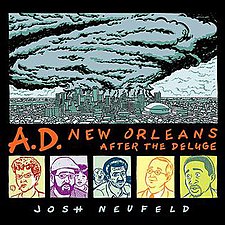
A.D.: New Orleans After the Deluge

Neufeld, J. (2009). A.D.: New Orleans after the deluge. New York, NY: Pantheon Books.
ISBN: 978-0-307--37814-9

Author & Illustrator: Josh Neufeld
Website: http://www.joshcomix.com/

Media Used: Pencil and ink on alternating solid color backgrounds (aqua, yellow, pale green, pale blue, pink,) for the first half of the book.  The second half of the book starts layering a background color with a different color to highlight special objects or persons.

Summary: This graphic novel, based on real life stories from Hurricane Katrina survivors, chronicles the days leading up to and following the storm and provides a much needed perspective of what was happening from those who had first hand experience.   

Personal Thoughts: The opening pages to this book are a series of landscape drawings depicting how New Orleans looked before (August 22, 2005), during, and after (August 31, 2005) the storm.  We then meet our characters in a very opening movie credits sort of way, which I enjoyed.  Leo & Michelle are a young couple who decided to wait until the last minute to evacuate due to financial hardship.  Abbas & his friend Darnell who decide to stay and protect Abbas' convenience store from possible looters.  Kwame is a high school senior who evacuates with his family.  Denise and her family ride out the storm in New Orleans, moving from their apartment to the Central City hospital to the Convention Center.  Doctor Brobson rides out the storm at home by throwing a hurricane party.  This book provides a great viewpoint of the storm from firsthand experiences.  The depiction of certain aspects of daily life or basic needs people had really helped me to relate with the characters.  Neufeld's website & Randomhouse provides an online teachers guide to accompany the book.

Lesson Plan #3: Hurricane Katrina

Non-Fiction in Graphic Novel Format

Awards:
Best American Comics, 2010
Mother Jones Top Books of 2009
New York Best Comics of 2009, Runner Up
MTV.com Best Nonfiction Comic of 2009
San Francisco Chronicle “Best in Comics”

Thursday, July 7, 2011

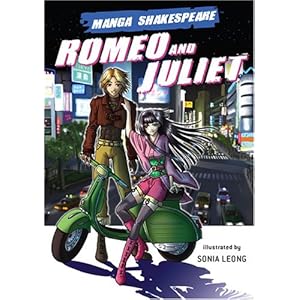
Romeo and Juliet [Manga Shakespeare]

Shakespeare, W. (original author), & Appignanesi, R. (Adapter). (2007). Romeo and Juliet. New York, NY: Amulet Books. ISBN: 978-0810993259

Author: William Shakespeare
Website (Wikipedia Entry): http://en.wikipedia.org/wiki/William_Shakespeare

Adapted By: Richard Appignanesi
Website: No Adapter Website

Illustrated By: Sonia Leong
Website: http://www.fyredrake.net/ 

Media Used: Ink 

Summary: In Tokyo, Romeo and Juliet fall in love at first sight.  The problem is their families are enemies, their love is forbidden.  The star crossed lovers attempt to find happiness despite their rival Yakuza families but all ends in tragedy. 

Awards:
Young Adult Library Services Association’s Quick Picks for Reluctant Young Adult Readers & Best Books for Young Adults, 2008.

Personal Reaction (provided by D. Reynolds): “Romeo and Juliet” is a classic story that everyone has been introduced to in one way or another, be it as required school reading of watching a movie adaptation.  This manga version is a wonderful introduction to a play well known throughout the world.  Readers can relate to the star crossed lovers in this modern interpretation. Modernizing Shakespeare’s works is a very popular trend.  Take for example the 1996 movie adaption of “Romeo + Juliet” starring Leonardo DiCaprio.  Instead of swords gun were carried.  In the manga version, the setting is modern day Tokyo with the families being part of the Yakuza.  Romeo is a rock idol, letters are sent through email and text, and Juliet rides a motorcycle.  Adding these exciting elements can keep readers interest who may be intimidated by the fact that the original text is used. By making the adaption a manga the illustrations used set the characters in Japanese culture quite well.  The original story blends effortlessly with the Japanese culture.  The social dynamics of the women and men are quite apparent.  In addition the stylization helps to show the mood in different scenes.  For example, in humorous moments the characters become chibis and when Romeo and Juliet fall in love with each other they are sparkly and surrounded by bubbles and diamonds. 

"The Classics Revisited" Group Project - Check out our group's presentation of this and other literary classic graphic novel adaptations that we have suggested for high school students. 

Manga

Curricular Connection: Grade 9 English
This manga version of “Romeo and Juliet” is a wonderful introduction to Shakespeare’s works.  Many students find it difficult to read just the text, especially with the complicated language.  The illustrations help so an understanding of the plot and what is being said occurs.  Reading this manga in addition to the play will show students the timelessness of Shakespeare and his work.

Wednesday, July 6, 2011

Every Human Has Rights

National Geographic. (2009). Every human has rights: A photographic declaration for kids. Foreword by Mary Robinson. Washington, D.C.: Author.
ISBN: 978-1-4263-0510-8

Author: National Geographic
Website: http://www.nationalgeographic.com/

Contribution By: ePals Global Learning Community
Website: http://www.epals.com/

Forward By: Mary Robinson
Website: http://www.theelders.org/elders/mary-robinson

Media Used: full color photographs with computer generated text.

Summary: The United Nations Universal Declaration of Human Rights, rewritten for accessibility to students, was the inspiration for a student writing contest.  The individual declarations, winning student entries, and photographs from National Geographic were then used to create this insiprational book.

Personal Reaction: This book was very well thought out.  The rewording of the Human Rights Declaration to increase its accessibilty to students was a great step in and of itself.  Students often learn about the U.N. and human rights as part of the standard curriculum.  ePals' development of a writing contest based on the newly worded declaration and the use of those writings in the book help to furthur connect this book with a student audience.  The photographs choosen from the National Geographic database were of the high quality expected from the company.  These photographs help to illustrate the people and ideas that the declarations support.  

Curricular Connection: World Language & History-Social Science Grade 10 & 11
California Standard: World Language: Cultures Stage I, II, & III - Recognize, state, and describe the similarities and differences in the target cultures and between the students’ own cultures.
History-Social Science 10.10.1 - Discuss the important trends in the regions today and whether they appear to serve the cause of individual freedom and democracy. 11.9 1 - Discuss the establishment of the United Nations and International Declaration of Human Rights and their importance in shaping modern Europe and maintaining peace and international order.

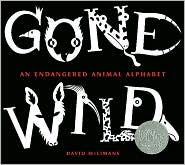
Gone Wild: An Endangered Animal Alphabet

McLimans, D. (2006). Gone wild: An endangered animal alphabet. New York, NY: Walker.
ISBN: 0-8027-9563-3

Author & Illustrator: David McLimans
Website: http://www.davidmclimans.com/

Media Used: The illustrations were created using a mixture of pencil, pen, brush, India ink, bristol board and computer.

Summary: Each letter of this alphabet has been transformed to represent a different endangered animal with the addition of certain animal characteristics, such as scales, wings, beaks, and horns. Extra information on their habitats, ranges, threats, and status is included.

Personal Reaction: A classmate had mentioned this Caldecott Honor book in a previous class.  At the time I was unable to obtain a copy of the book to look at.  I am glad to have been able to get a copy this time around.  It is definitely worth a look whether your a small child, a teen, or an adult - there's something for everyone inside.  Each letter of the alphabet is beautifully transformed to represent a certain endangered animal.  A little red box in the corner list some of the animal's basic information such as class, habitat, range, threats, and status.  In the top corner of the page, the letter of the alphabet and the animal's common name is listed alongside its scientific name.  The back of the book contains extra information on the animals, organizations, and books for further reading. 

Curricular Connection: 7th Grade Earth Science & 9th - 12th Grade Ecology
California Science Standard: Earth and Life History 7.4.g - Students know how to explain significant developments and extinctions of plant and animal life on the geologic time scale [compare to current animals in danger of extinction]. Ecology 6.b - Students know how to analyze changes in an ecosystem resulting from changes in climate, human activity, introduction of nonnative species, or changes in population size [the information at the back of the book relates how certain animals are being endangered due to such changes].

Thursday, June 9, 2011

Maus: A Survivor's Tale - Part I: My Father Bleeds History

Spiegelman, A. (1986). Maus: A survivor's tale. Part I: My father bleeds history. New York, NY: Pantheon Books.
ISBN: 0-394-74723-2

Author: Art Spiegelman
Author's Website: http://www.barclayagency.com/spiegelman.html

Illustrator: See Author
Media Used: Black ink on a white background.

Summary: Maus tells the story of Art Spiegelman's father, Vladek Spiegelman, a Polish Jew and Holocaust survivor. The story simultaneously tells of Vladek’s life before and during World War II as well as his life later in New York.

Personal Reaction: Once I picked up this book, I was unable to put it down.  It illustrates what daily life was like for Jews before and after the Nazi's came into power.  The hardships and fear they lived with.  Vladek's story of life in Poland is interrupted by his present day life - which improves the telling of the story rather then distracts from it.  The stark black and white illustrations fit the story's material well.  A great recommendation for students learning about the Holocaust.

Metaphor Use: The Jews in the story are represented as skinny mice, the polish as plump pigs, and the Nazis as big buff cats.  Spiegelman used different groups of animals to represent the different nationalities, religions and races involved in the war.  All the animals within a group were identical to one another except for their clothing which helped to highlight how people during that time viewed other's by their race or religion first and foremost.  Characters who were hiding by pretending to be of another race were represented as wearing another animal's face as a mask. 

Non-Fiction in Graphic Novel Format
Curricular Connection: 10th Grade World History
California Standard 10.8: Students analyze the causes and consequences of World War II.

Awards: Pulitzer Prize Special Award Winner (1992)

Thursday, December 2, 2010

Sonny with a Chance (TV Show)

Robbins, B., Bridgett, S. S., Feldman, M., & Marmel., S. (Producers). (2009). Sonny with a chance [Television series]. Burbank, CA: Disney Channel.

Interest Level: Ages 8 to 17
Genre: Family/Teen Sitcom
Subjects/Themes: Comedy, Fame, Teenage Actors/Actresses, Rivalry
Running Time:  23 minutes per episode
Rating: TV-G 

Plot: Sonny Munroe (played by Demi Lovato) has won the chance to star on her favorite comedy television show, So Random!.  Sonny is a good hearted, hard working, goofy and friendly individual.  The show is divided between Sonny's interactions behind the scenes with the So Random! cast and their rivals, the Mackenzie Falls cast, and clips from the So Random! and Mackenzie Falls shows.  Mackenzie Falls, one of the shows within the show, is a tween soap drama with overacting characters.  So Random! is a collection of comedy sketch shows similar to Saturday Night Live but for tweens. 

Personal Thoughts:  This show has a lot of different things going on in it, one of which will probably appeal to most tweens.  First there's the comedy sketches, then the Mackenzie Falls scenes, then the behind the scenes interactions, and then Sonny's interactions with her mother.  Sonny tends to act more like an adult then her mother at times but her mother is supportive and cares about Sonny a lot.  The So Random! cast is expectedly funny made up of Tawni (fashion obssed diva), Zora (a quirky genius), Nico and Grady (two pranksters who are best friends).  Chad is the star of Mackenzie Falls and has a love/hate relationship with the So Random! cast members.  He is spoiled and egocentric but also kind and sweet and times.  A good show for tweens interested in some good laughs.

Awards/Recognition:
Nickelodeon Australian Kids' Choice Awards: Favorite Comedy Show Winner (2009)
Nickelodeon Kids' Choice Awards: Favorite TV show Nominee (2010)
Teen Choice Awards: Choice TV Show: Comedy Nominee (2010)

Website: Disney Channel's Sonny with a Chance Website

Wednesday, December 1, 2010

Cloudy with a Chance of Meatballs (Book)

Barrett, J. (1978). Cloudy with a chance of meatballs. New York, NY: Antheneum Books for Young Readers. ISBN: 0-689-30647-4

Interest Level: Ages 4 to 8
Genre: Picture Book
Subjects/Themes: Weather, Food, Bedtime Stories, Granparents, Imagination

Plot: Inspired by a pancake landing on one of the children's head, a grandfather tells his two grandchildren a bedtime story about the town of Chewandswallow.  The town of Chewandswallow was like most other towns except that instead that they didn't grow or buy food.  Instead they got their food three times a day from the sky.  Instead of normal weather, it would rain hamburgers or soup, it would snow mashed potatoes, or the wind would blow in hot dogs.  Everything was fine until the weather started getting out of control blowing in more food then the people could eat.  The town was slowly getting destroyed by all the food so the people decided to leave by constructing boats out of stale bread and peanut butter.  The finally sailed far enough to a place where food didn't fall from the sky and instead people grew and stored it.  There they stayed, never returning the Chewandswallow.

Personal Thoughts: A cute story that just makes you want to look out your window and use your imagination.  The idea of food falling from the sky is one that children can use to help pass the days of bad weather when they can't go outside.  There are some sweet scenes between the children and their grandpa during the story.  A great addition to a preschool storytime with a food or imagination theme.  The movie adaptation only takes a few concepts from the book such as the food being part of the weather and making bread boats.  In the movie, a scientist creates a machine to control the weather and cause food to fall.  The machine eventually goes out of control and starts destroying the town.

Awards/Recognition:
Delaware Diamonds: Primary (Grades K-2) (1991)
Georgia Children's Book Award: Picture Storybook Award (1984)
Golden Sower Awards (Nebraska): Grades K-3 (1983)

Other Books by Author: Animals should definitely not act like people (1980); Animals should definitely not wear clothing (1970); I Know Two Who Said Moo: A Counting and Rhyming Book(2000); Which Witch Is Which? (2001); Never Take a Shark to the Dentist and Other Things Not To Do (2008); The Marshmallow Incident (2009);

Tuesday, November 30, 2010

Some Babies Sleep (Book)

Cotton, C. (2007). Some babies sleep. New York, NY: Philomel Books. ISBN: 978-0-399-24030-0

Interest Level: Ages 4 and under
Genre: Picture Book
Subjects/Themes: Bedtime, Sleeping, Animals, Stories in Rhyme

Plot: The story describes the different places animal babies sleep using rhyming text.  Whether in the desert, snow, under ground, or in a bed the story explains that all babies sleep.  The illustrations show a little baby in red pajamas sleeping with different animals in the places described.

Personal Thoughts: A sweet bedtime story whose simple rhymes offer a gentle lullaby rythm.  The animal names are never mentioned in the story only the different places they sleep.  A fun game would be to have a child guess which animal is sleeping in the places described.  The illustrations are soft and sweet with animal parents, animal babies and the human baby all cuddled up with one another.

Other Books by the Author: Snow Ponies (2001); At the edge of the woods (2002); Rain Play (2008)
Author Website: Cynthia Cotten Children's Author Website

The Suite Life of Zack & Cody (TV Show)

Kallis, D. & Geoghan, J. (Producers) (2005). The suite life of Zack & Cody [Television series]. Burbank, CA: Disney Channel.

Interest Level: Ages 8 to 17
Genre: Family/Teen Sitcom
Subjects/Themes: Family, Siblings, Comedy, Hotel,
Running Time:  23 minutes per episode
Rating: TV-G 

Plot: The series focuses around Cody and Zack who are twin brothers living in the Tipton Hotel with their single mother.  Their mother works at the Tipton Hotel as a lounge singer.  Their father, Kurt, is a musician who travels around a lot.  The boys tend to get into a lot of mischief trying to pass the time or make some extra cash.  London Tipton, the rich hotel owner's daughter, is a bit air brained, gets what ever she wants, and also lives at the hotel.  Maddie works for the hotel as a candy counter girl and is the opposite of London being both smart and frugal.  Mr. Moseby runs the Tipton hotel and is often the person trying to stop the boys from destroying the hotel or disturbing the guests.

Personal Thoughts:  A great show for boys or girls.  Each of the characters have their strengths and weaknesses.  We also see the characters grow up in the series from childish pranksters to more social savvy teens.  The hotel setting offers a lot of different opportunities for the boys to meet different superstars, officials, and tourists that normal they would not come in contact with.  Each episode usually revolves around the boys coming up with some plan that ends up with them crossing paths with a Tipton Hotel vistor.  London and Maddie are often doing other activities or schemes that sometimes has them working with the boys.  The series ended in 2008 and was followed by the sequel The suite life on deck.  In the sequel, the boys and London are attending a semester away at sea on the Tipton cruise ship.  Mr. Moseby is also there as manager of the ship.  A great show for all ages, definitely a Must See! 

Awards/Recognition:
BMI Film & Television: Cable Award (2005 & 2007)
Young Artists Award: Best Family Television Series (Comedy) (2007)
Kids' Choice Award, UK: Best Television Series (2007)
ASCAP Award for Top Television Series (2008 & 2009)
iParenting Media Award (2008)

Website: Disney Channel's The Suite Life Website

Monday, November 29, 2010

Orange Pear Apple Bear (Book)

Gravett, E. (2007). Orange pear apple bear. New York, NY: Simon & Schuster Books for Young Readers. ISBN: 978-1-4169-3999-3

Interest Level: Ages 3 and under
Genre: Picture Book
Subjects/Themes: Bears, Play on Words, Colors, Shapes, Foods,

Plot: Using only five words (apple, pear, orange, bear, and there), children explore the concept of connecting different words to describe things in different ways.  For example the phrase "orange bear" is used with a picture of an orange fruit and a bear as well as with an orange colored bear.

Personal Thoughts: A great sight word learning tool.  The repetitiveness of the words is anything but boring when paired with the different illustrations.  The water color illustrations pop against the white background.  The bear juggles and eats the different fruit.  The bear is described using fruit colors and shapes.

Awards/Recognition:
ALA Notable Children's Books - Young Readers Category (2009)
Oprah's Kids' Reading Lists - New Releases: 3-to-5 Years
School Library Journal Best Books (2007)

Author's Website: Emily Gravett's Website
Other Books by the Author: Dogs (2009); The Odd Egg (2009); Monkey and Me (2008); Wolves (2006);

The Lion & The Mouse (Book)

Pinkey, J. (2009). The lion & the mouse. New York, NY: Little, Brown and Company Books for Young Readers. ISBN: 978-0-316-01356-7

Interest Level: Ages 8 and under
Genre: Picture Book
Subjects/Themes: Animals, Folk Tales, Stories without Words, Cooperation,

Plot: Without the use of words, the pictures in this story retell Aesop's classic tale of the lion and the mouse.  The only text is a few scattered animal sounds in the background.  This tale is set in a more modern animal preserve in the African Serengeti.  The mouse, running from an owl, gets captured by a lion.  The mouse is let go by the lion and returns to its baby filled nest.  Hunters arrive and set a trap for the lion.  The lion is caught in their net.  The mouse hearing the lion's roar runs to the lion and chews through the ropes freeing the lion.  The story ends with the mouse taking a piece of the rope back to its nest for the baby mice to chew on.

Personal Thoughts: The lack of words in this story only make the meaning behind it sweeter.  The animals and the background are all realistically drawn.  The body language and facial expressions on the lion are life-like showing grumpiness at being awaken, curiosity in the mouse, pride when walking around, startlement at being caught and gratitude towards the mouse.  I can almost see the mouse actually scurrying across the pages from one place to another.  So wonderfully done, its no surprise why it was choosen as a Caldecott Award Winner.  Definitely a Must See Book for any age!  Great for children to browse through on their own. A possible lesson plan would be to have children write their own dialog for the story.

Awards/Recognition:
ALA Notable Children's Books - All Ages Category (2010)
Booklist Editors' Choice - Books for Youth - Young Readers Category (2009)
Caldecott Medal (2010)
Indies' Choice Book Awards: Children's Illustrated (2010)
New York Times Best Illustrated Children's Books (2009)
Parents' Choice Awards - Picture Books (2009)
School Library Journal Best Books (2009)

Other Books by Author: Three Little Kittens (2010); The Ugly Duckling (1999); The all-I'll-ever-want Christmas doll (2010)

Strega Nona (Book)

De Paola, T. (1975). Strega Nona. New York, NY: Simon & Schuster Books for Young Readers. ISBN: 0-671-66283-X

Interest Level: Ages 3 to 7
Genre: Picture Book
Subjects/Themes: Magic, Folk Tales, Witches, Pasta, Greed, Temptation, Caldecott

Plot: Strega Nona is a witch who creates potions to help other people with their problems.  She hires Big Anthony to help her keep house.  The one rule of the house is that Big Anthony is never to touch Strega Nona's pasta pot.  Strega Nona's pasta pot would make pasta appear when she sang to it and disappear when she sang again to it and blew it three kisses.  Big Anthony told the townsfolk about the magic pasta pot but nobody believed him.  When Strega Nona leaves on a trip Big Anthony makes the pot make pasta for the whole village.  But Big Anthony had only saw Strega Nona singing to the pot not blowing kisses and could not get the pot to stop making pasta.  Soon the pasta overflowed the house and into the village.  Strega Nona comes home and rescues the village from the pasta.  As punishment, Big Anthony is forced to clean the village and Strega Nona's house by eating all the pasta.

Personal Thoughts: A good folk story with a good moral of listening to what you are told and following the rules.  Big Anthony is a realistic character and gets angry when the townsfolk don't believe his story.  Strega Nona is depicted as a kind old witch who helps others out with her potions but also disciplines them appropriately.  The illustrations are full of detail and help tell the story well.  A great story for preschool storytimes with a friendly witches or doing the right thing theme.

Awards/Recognition:
Caldecott Honor Book (1976)
ALA Notable Children's Book
Kirkus Choice
Horn Book Honor List
Nakamori Prize
Brooklyn Museum & Public Library Art Books for Children Citation (N.Y.)

Other Books in the Series:
Strega Nona Her Story (1996); Strega Nona Meets Her Match (1993); Strega Nona Takes a Vacation (2000)

Author Website: Offical Tomie de Paola Website

The True Story of the 3 Little Pigs (Book)

Scieszka, J. (1989). The true story of the 3 little pigs. New York, NY: Viking Penguin. ISBN: 978-0-670-82759-6

Interest Level: Ages 3 to 8
Genre: Picture Book
Subjects/Themes: Humor, Wolves, Pigs, Twisted Fairy/Folk Tale, Misunderstandings,

Plot: Alexander T. Wolf tells his side of the three little pigs story.  He explains that it was all a misunderstanding that resulted from him having a cold and trying to borrow a cup of sugar.  Wolf went to his neighbor's house to borrow some sugar when he accidentally sneezed and blew down the straw house killing the first little pig.  Not wanting to waste food, the wolf ate the little pig.  The same thing happened when he went to the next house and again not wanting to waste food the wolf ate the dead little pig.  The third little pig's house didn't blow down from a sneeze since it was made of bricks but the third pig was also very rude.  The pig started calling the wolf's grandma names which made the wolf angry.  When the cops and reporters came, the wolf was so angry he was trying to break down the pig's door.  It was the reporters who started calling him the big bad wolf and made up the other story.

Personal Thoughts: A nice remake of the three little pigs story told from the wolf's point of view.  The wolf speaks directly to the reader most of the time begging them to look at it from his point of view.  The illustrations are well done showing a professor-like wolf with glasses and a mean looking pig.  The pictures of cake batter and cheeseburgers are a little gruesome yet funny with bunny ears and pig tails sticking out.  The ending shows the wolf behind bars being guarded by a pig policeman.  A Must Read for fairy tale fans.

Awards/Recognition:
ALA Notable Children's Books (1990)
Black-Eyed Susan Book Awards (Maryland): Picture Book (1992)

Other Books by Author: Robot Zot! (2009); Melvin might? (2008); Cowboy and Octopus (2007); The Frog Prince Continued (1991); Baloney (Henry P.) (2001);

Author's Website: Jon Scieszka Worldwide

Wizards of Waverly Place (DVD)

Lafferty, K. (Producer), Berendsen, D. (Writer), & Spiro, L. (Director). (2009). Wizards of Waverly Place: The movie [DVD]. United States: Walt Disney Studios Home Entertainment.

Interest Level: Ages 6 to 17
Genre: Comedy, Drama, Fantasy
Subjects/Themes: Family, Secrets, Wizards, Magic,
Running Time:  98 minutes
Rating: TV-G
 
Plot: Unknown to the rest of the world, wizards are real and live in the human world.  Only one child per family is allowed to inherit wizard magic.  Siblings in wizard families must practice their wizard skills and then compete to determine who will be the sole possessor of the family's powers.  The Russo family is just such a wizard family.  The father, Jerry, is a former wizard who gave up his chance of being a wizard in order to marry a mortal, the children's mother Theresa.  The three Russo children are Max, Alex, and Justin.  In the movie, the family goes on vacation to Puerto Rico.  Alex was going to stay home but she gets in trouble right before the rest of the family leaves and is forced to go.  Alex gets in a fight with her mother and ends up wishing that her parents had never meet which ends up coming true.  The siblings must band together a quickly find the Stone of Dreams but end up being double crossed by another wizard.  Desperate since Max has already disappeared, Alex and Justin compete in the wizard contest in order for one of them to gain full wizard powers and reverse the spell.  Alex ends up winning and wishing for everything to go back as it was which ends up rewinding time.

Personal Thoughts: I love this TV series and the movie was just as good.  There are many different characters for viewers to enjoy watching and possibly relate to.  Justin is the older brother, smart, and follows the rules more often then not.  Alex is sometimes a trouble maker because she uses magic to cut corners whenever possible, isn't interested in work or school, and is most interested in having fun.  Max is the youngest brother, is very naive, and easily confused.  The TV series and the movie are both funny and full of good lessons about right and wrong.  The movie follows the classic lesson of being careful what you wish for because you might just get it.  Alex is extremely interested in her own life over that of her family's.  She's struggling with wanting to be treated like an adult and be independent at the same time.  There's a little romance as the children try to help their parents fall in love again.  There's also a lot of humor from the different antics.  There are also chapter books based on the TV series and on the movie available.  A great family or tween movie.  No need to be familiar with the TV series to understand and enjoy the movie.  Definitely a Must See movie!

Awards/Recognition:
62nd Primetime Emmy Winner for Outstanding Children's Program (2010)
Image Award Nominee for Outstanding Children's Program (2010)
Golden Reel Nominee for Best Sound Editing (2010)

Website: Disney Channel's Wizards of Waverly Place Website

Saturday, November 27, 2010

Bark, George (Book)

Feiffer, J. (1999). Bark, George. New York, NY: HarperCollins Publishers. ISBN: 0-06-205186-5

Interest Level: Ages 5 and under
Genre: Picture Book
Subjects/Themes: Dogs, Animal Sounds, Humor,

Plot: A mother dog becomes distressed because instead of barking like a dog should, her puppy is making other animal sounds.  In order to solve George's problem, George's mother takes him to the vet.  After asking George to bark and getting other animal sounds, the vet reaches deep inside George and pulls out different animals.  After pulling out a cat, a duck, a pig and a cow, George finally is able to bark.  The mother dog is so happy she kisses everyone and takes George out to show off his new bark.  But instead of barking George says "Hello." 

Personal Thoughts: Children will enjoy making the different animal sounds.  The fact that the vet pulls out a variety of animals from deep down inside George is pretty funny, especially when you start considering how they got in there in the first place.  Children might be worried or might just find it hilarious when George says "Hello" at the end of the book and we must presume that he swallowed a person.  I really like the animated version of this book which is narrated by John Lithgow.  The animation for the cartoon is minimal and doesn't take away from feeling of the original illustrations.   A Must Read picture book!  Great for dog or animal sound themed storytimes.

Awards/Recognition:
ALA Notable Children's Books (2000)
Booklist Editors' Choice - Books for Youth - Young Readers Category (1999)
Buckeye Children's Book Award (Ohio): Grades K-2 (2001)
Flicker Tale Children's Book Award (North Dakota): Picture Books (2002)
Florida Reading Association Children's Book Award (2003)
Georgia Children's Book Award: Picture Storybook Award (2002)
Grand Canyon Reader Award (Arizona): Picture Book (2002)
Great Lakes Great Books Award (Michigan): Grades K-1 (2002)
Keystone to Reading Book Award (Pennsylvania): Primary category (2001)
Parents' Choice Awards - Picture Books (1999)
School Library Journal Best Books (1999)

Author's Website: Jules Feiffer Website

Other Books by the Author: Phantom Tollbooth (1961); The Daddy Mountain (2004);

Go Away, Big Green Monster! (Book)

Emberley, E. (1992). Go away, big green monster!. Boston, MA: Little Brown Books for Young Readers. ISBN: 978-0-316-23653-9

Interest Level: Ages 5 and under
Genre: Picture Book
Subjects/Themes: Die-cut pages, Monsters, Fear,

Plot: Meet the big green monster.  This story introduces the reader to the big green monster one feature at a time.  Purple scraggly purple hair, big yellow eyes, and sharp white teeth are only a few of the scary features that make up the big green monster.  After the whole monster is slowly revealed to the reader, the reader responds "Go Away!" to each feature until the whole monster is gone and isn't allowed to come back until the reader says so. 

Personal Thoughts: A wonderfully made book.  The use of die-cuts to slowly reveal the monster and make him disappear again are ingeniously constructed.  I made a felt board version of this book a few years ago for a preschool story time which also included the words for hair, eyes, mouth, nose, and teeth.  I had the children help me match the words to the features which encouraged word recognition.  The children especially love saying "Go Away.." with me as I'm reading the book.  This book is great for bedtime, monsters, or talking about fears themed storytimes. 

Awards/Recognition:
Black-Eyed Susan Book Awards (Maryland) (1995)

Author's Website: Ed Emberley's Website
Other Books by the Author: Glad monster, sad monster: a book about feelings (1997); Bye-bye, big bad bullybug! (2007);

Tuesday, November 23, 2010

Book! (Book)

George, K. (2001). Book!. New York, NY: Clarion Books. ISBN: 0-395-98287-1

Interest Level: Ages 4 and under
Genre: Picture Book
Subjects/Themes: Books, Rhyming Stories,

Plot: A little boy wonders what gift he has gotten that is flat and square.  A book!  He lists all the things he likes to do with his book such as reading by himself, reading to others, using it as a hat, and taking it for a wagon ride.  The ending scenes show the little boy curled up in his mother's lap reading the book at bedtime.  A cute little Siamese cat and stuffed stripped elephant doll follow the boy in his activities with the book.

Personal Thoughts: A cute and simple book.  The illustrations are very lovely and humorous.  The cat and the doll follow and join the the boy in his acitvities such as reading upside down.  The things the boy lists to do with his book are things any child might enjoy, such as reading in a secret hiding place under the table.  The pages in the book are made with a more durable poster board like paper perfect for younger children's handling.  The background illustrations are a mix of colors going from an oranges to reds to greens, blues, and purples.  This book would go well with a bedtime or books/library storytime theme.

Awards/Recognition:
New York Public Library 100 Titles for Reading and Sharing
Oppenheim Toy Portfolio Gold Award
Parent's Guide to Children's Media Award
CCBC Choices 2002
Beginning with Books 2001 Best Books for Babies

Other Books by the Author: One Mitten (2004); Up! (2005);
Author's Website: Kristine O'Connell George's Children's Poetry Corner

Monday, November 22, 2010

Ella Enchanted (Book)

Levine, G. C. (1997). Ella Enchanted. New York, NY: Harper Collins Publishers. ISBN: 0-06-027510-3

Interest Level: Ages 9 to 14
Genre: Fantasy Fiction
Subjects/Themes: Fairy Tales, Cinderella, Curses, Obedience, Fairies, Princes, Step Sisters, Romance

Plot: Based on the Cinderella story, Ella is cursed with the gift of obedience.  Any command given Ella must obey.  But Ella is resourceful and fights her way around every command, only obeying them as much as she must.  When Ella's mother dies, her father attempts to marry her off to a rich old man but fails.  Instead her father ends up marrying Dame Olga for money.  He later finds out she is just as poor as he and was marrying him for the same reason.  Ella's two step sisters figure out Ella's curse and use it to take advantage of Ella and make her life miserable.  Ella also makes friends with the Prince but tries to keep her distance in case someone uses her curse to harm him.  Eventually Ella goes on a quest, battling ogres and giants, to find Lucinda the fairy and have her break the curse.  When her quest fails, she then goes to the Prince's ball to see the Prince one last time.  There Ella triumphantly learns that the curse can only be broken by her own will.

Personal Thoughts: A lovely twist on the Cinderella story.  It always bothered me that Cinderella allowed her step family to treat her so awfully.  Levine gives a plausible reason for Ella's obedience (if you can call fairy magic plausible).  The curse also allows us to see Ella's ingenuity and rebellion against the commands she is given.  Ella's romance with the Prince is also more realistic then just falling in love at the ball.  Ella and the Prince meet and develop their friendship over time through letters that help them learn about one another.  An enjoyable read, this book deals with what obedience truly means, the importance of friendship, and the importance of finding the strength to stand up for yourself.  Definitely a Must Read!

Book Talk: Check out my 2 minute book talk for Ella Enchanted.
Awards/Recognition:
Newberry Honor Award (1998)
ALA Notable Children's Books (1998)
Black-Eyed Susan Book Awards (Maryland): Grades 6-9 (2000)
Booklist Editors' Choice - Books for Youth - Middle Readers Category (1997)
California Young Reader Medal: Middle School (2000)
Grand Canyon Reader Award (Arizona): Teen Book (1999)
Iowa Teen Award (2000)
Maine Student Book Award (1999)
Rebecca Caudill Young Reader's Choice Book Award (Illinois) (2000)
School Library Journal Best Books (1997)
YALSA Best Books for Young Adults (1998)
Young Hoosier Book Award: Middle Books (2000)

Other Books by the Author: Cinderellis and the glass hill (2000); Ever (2008); Fairest (2006); Fairy dust and the quest for the egg (2005); The two princesses of Bamarre (2001);

Author's Website: Gail Carson Levine's Website

Alvin and the Chipmunks: The Squeakquel (DVD)

Bagdasarian, Jr., R., Karman, J. (Producers), Thomas, B. (Director), Vitti, J., Aibel, J., & Berger, G. (Writers). (2010). Alvin and the chipmunks: The squeakquel [DVD]. Beverly Hills, CA: 20th Century Fox Entertainment.

Interest Level: Ages 8 to 14
Rating: PG
Running Time: 89 minutes
Subjects/Themes: Family, Chipmunks, Talking Animals, High School,

Plot: The movie starts with Alvin and the Chipmunks playing at a benefit concert in Paris where Dave, their guardian, gets injured.  Dave is forced to recover in Paris while the Chipmunks go ahead home where Aunt Janice is suppose to take care of them.  Unfortunately Aunt Janice also meets with an accident and her grandson, Toby, ends up taking care of the Chipmunks instead.  The Chipmunks start school for the first time and end up having to deal with some bullies.  Alvin's desire to be popular starts to drive the brothers apart.  Meanwhile the Chipmunks old enemy Ethan signs the Chipettes and wants to use them to get back at the Chipmunks.  The two groups end up falling for one another.  Ethan puts the Chipettes in a cage and plans to force them to perform for him.  Alvin goes to their rescue and the two groups perform together in a musical competition to save the school's music program.

Personal Thoughts: Alright I'm a chipmunk fan from way back.  I think the squeaky remakes of popular songs is awesome rather than annoying.  If you can't stand the squeakiness you probably can't stand this movie.  But for tweens who love talking animals, this is another movie they'll probably enjoy.  The Chipmunks have to deal with bullies and the issue of choosing popularity or choosing to stand by your family.  The fighting between the chipmunks is fighting that you could see among any group of siblings or friends.  Alvin doesn't seem to realize the importance of his family until after he misses the song competition and let's his brothers down.  Learning from his mistakes, Alvin understands what he did and makes up for it.  Some popular songs that are featured in the movie include "All the Single Ladies," "You Spin Me Round (like a record)," and "Shake Your Groove Thing."

Prequel: Alvin and the Chipmunks (2008)

Awards/Recognition:
Kids' Choice Award Winner for Favorite Movie (2010)

Sunday, November 21, 2010

Owl Moon (Book)

Yolen, J. (1987). Owl moon. New York, NY: Philomel Books. ISBN: 0-399-21457-7

Interest Level: Ages 2 to 6
Genre: Picture Book
Subjects/Themes: Caldecott Winner; Father and Daughter; Owls; Forests; Nature Walks; Winter; 

Plot: A girl and her father go walking in the woods late one night in search of owls.  They walk far from the noises of where they leave to the quiet of the woods.  The little girl is careful not to make any noise which might scare the owls away.  As they walk through the woods, the girl's father makes owl noises in order to call the owls to them.  The little girl understands that sometimes they answer and sometimes they can't be found.  In the end, they manage to find one who lands on a branch nearby.

Personal Thoughts: A sweet story of about a girl's first special outing with her father.  The girl describes the sounds and sights around her as they walk from their house to the woods.  The illustrations depict a snow covered forest brightly lit by a full moon.  The girl explains that "you don't need words" when you go owling, just hope.  She is careful to stay quiet, not ask questions, and listens carefully for owl sounds.  The text in this book makes me want to talk softly.  A good book about fathers and daughters, about the forest animals, and about what hope is. 

Awards/Recognition:
Caldecott Winner (1988)
Florida State Reading Award Nominee (1990)
ALA Notable Children's Books (1988)

Author's Website: Jane Yolen's Website